
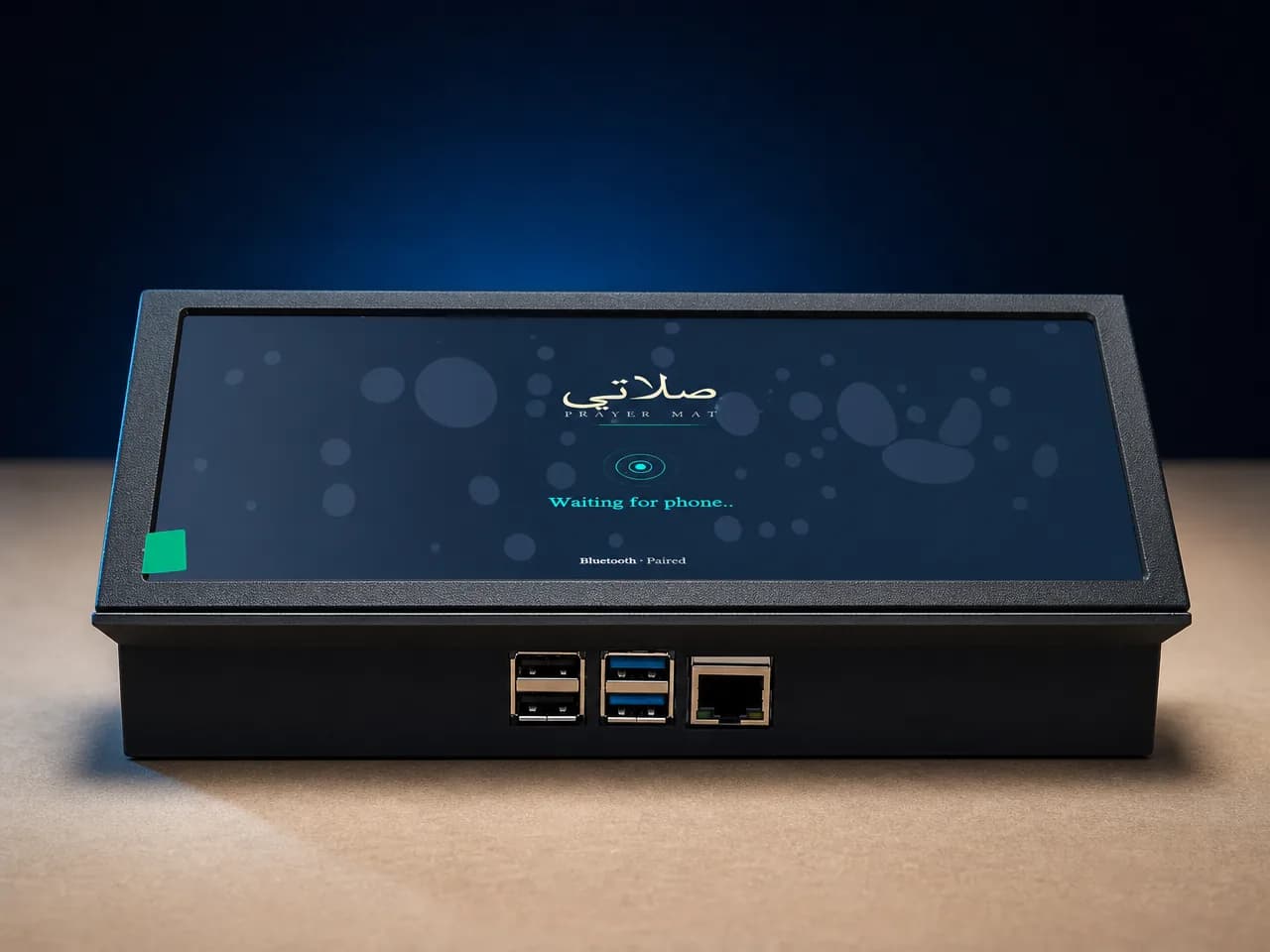
Why prayer can feel difficult for learners
Prayer sits at the centre of a Muslim’s day — five appointments that everything else arranges itself around. Standing for it, though, asks a great deal at once: the order of the postures, the words that belong to each of them, and Qur’anic recitation in a language the worshipper may not yet speak.
For a new Muslim, a child learning their first rak‘ah, or someone who has prayed for years in a language they never studied, the distance between wanting to pray well and knowing what comes next can be discouraging. People hesitate. They cut the prayer short, or wait until somebody is free to guide them through it.
That hesitation is what we want to answer — not by making learning matter less, but by keeping guidance within reach at the moment it is actually needed.
What we are making
The Salati Prayer Mat is a guided-prayer companion, currently in development, designed to work alongside the Salati app. Its purpose is to present what a worshipper needs — quietly, respectfully, and only where it helps.
The prototype pairs with a phone over Bluetooth and shows its guidance on a wide, low-profile display that sits ahead of the worshipper at floor level, within the natural line of sight during prayer.
The principle we are designing to is simple: guidance should be present when it is needed and absent when it is not. Prayer remains the focus, and the device should never compete with it.
Who it is for
- Non-Arabic speakers who want to follow and understand what they recite.
- New Muslims taking their first steps into the daily prayers.
- Children learning the postures and the words that go with them.
- Muslims who have not yet memorised the Qur’anic recitations that prayer requires.
- Anyone who wants more confidence while they keep learning.
Different needs, one aim: that nobody holds back from standing for prayer simply because they are still learning.
From idea to working prototype
What exists today is a working prototype, not a finished product. We built it to answer the practical questions that only a physical device can answer.
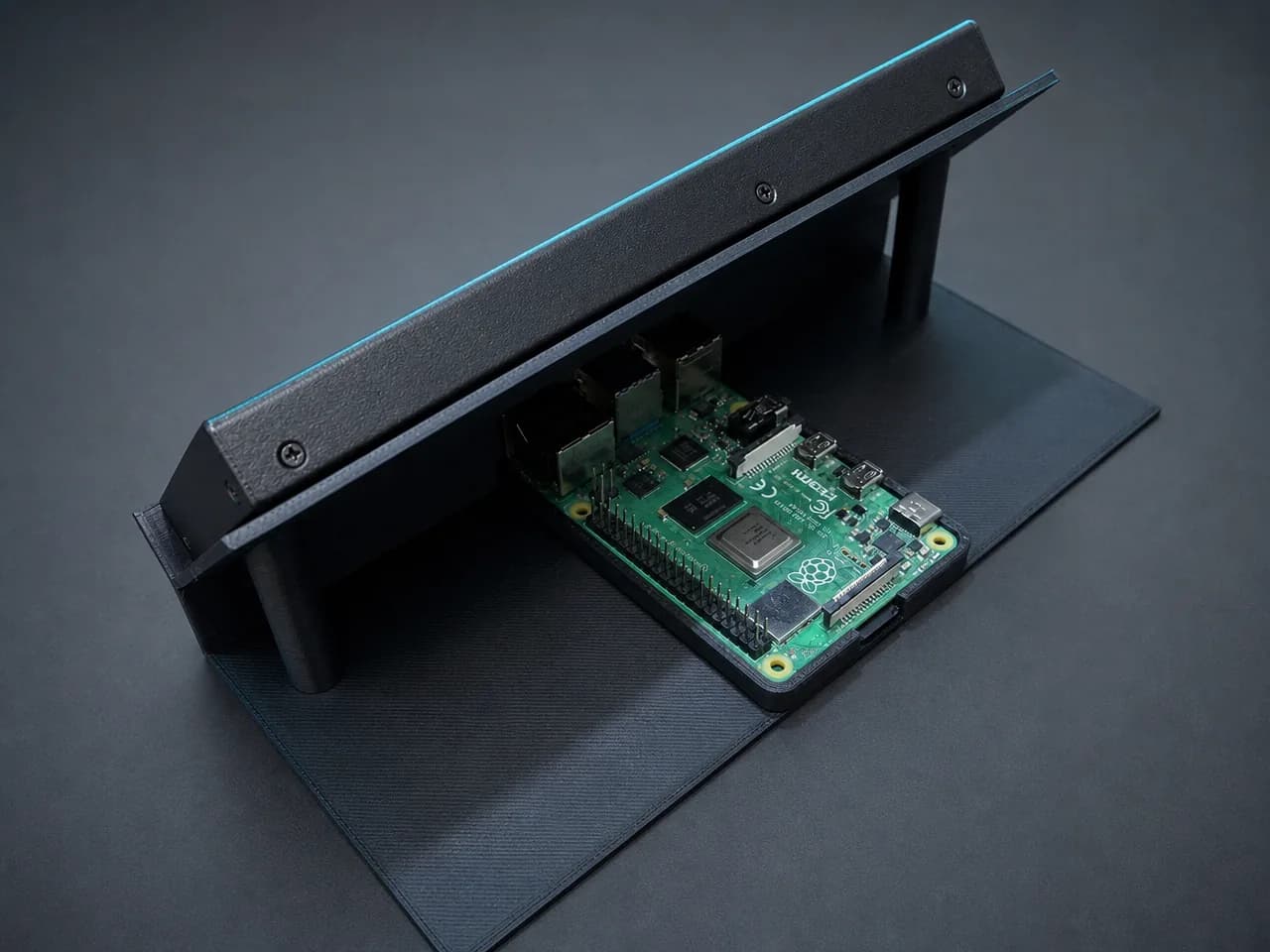
The current unit brings together a wide display, a Bluetooth connection to the phone with a waiting screen shown until pairing completes, local computing hardware that runs the experience on the device itself, and a custom 3D-printed enclosure that holds all of it at the right height and angle.
Every iteration is tested for usability, reliability and form. Is the text legible from standing and from sitting? Does the connection recover cleanly when it drops? Does the enclosure stay stable through a full prayer? Where should the device sit so that it never comes between a worshipper and the place of prostration?
The enclosure, the display size, the mounting angle and the software will all keep changing. That is what a prototype is for.
A bridge toward confident, independent prayer
The Salati Prayer Mat does not replace learning Arabic, memorising the Qur’an, sitting with trusted teachers and scholars, or the personal devotion that prayer asks of each of us. It is not a substitute for any of that, and it is not meant to be.
Think of it as scaffolding: support that carries you while you build, and that matters less as the structure begins to stand on its own. The measure of success is a worshipper who needs it less as time goes on.
Coming soon
The Salati Prayer Mat is in active development. We are not announcing a price, a release date or a place to order it, because none of that is decided yet.
What we can share is the work itself: prototypes as they change, what testing teaches us, and the decisions we make along the way. When there is something to announce, you will find it here and in the Salati app.
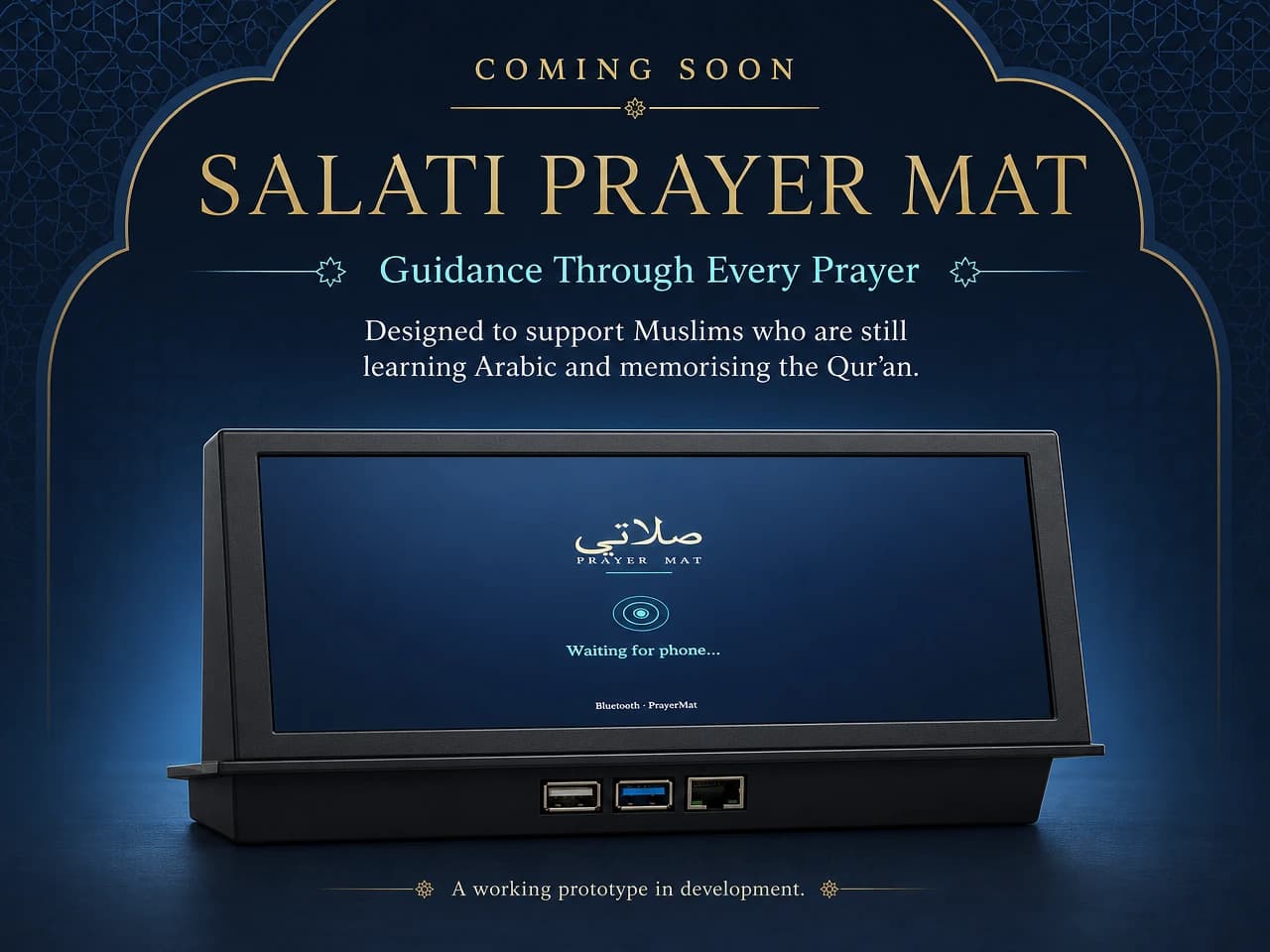
Salati Prayer Mat — Guidance Through Every Prayer.